


ICS2 (Import Control System 2): Everything You Need to Know About the New Requirement for Exports to European Countries

Samantha Souza • 29 de agosto de 2025

The European Union has recently made the use of the Import Control System 2 (ICS2) mandatory. It is a customs security and protection system designed to strengthen border controls by requiring cargo information to be declared before shipment at the port of origin, enabling a more efficient risk analysis. 


This measure complements the ENS (Entry Summary Declaration), which applies to all cargo destined for or transiting through European Union countries, and will become mandatory as of September 1, 2025. 

What is ICS2? 

ICS2 (Import Control System 2) is a digital platform created by the European Union to facilitate and streamline the control of imports of goods from outside the bloc. 

The system is used to track and monitor shipments, including their origins, destinations, and the types of goods involved, providing greater visibility and control over the movement of goods. 


Which countries are subject to this new regulation? 

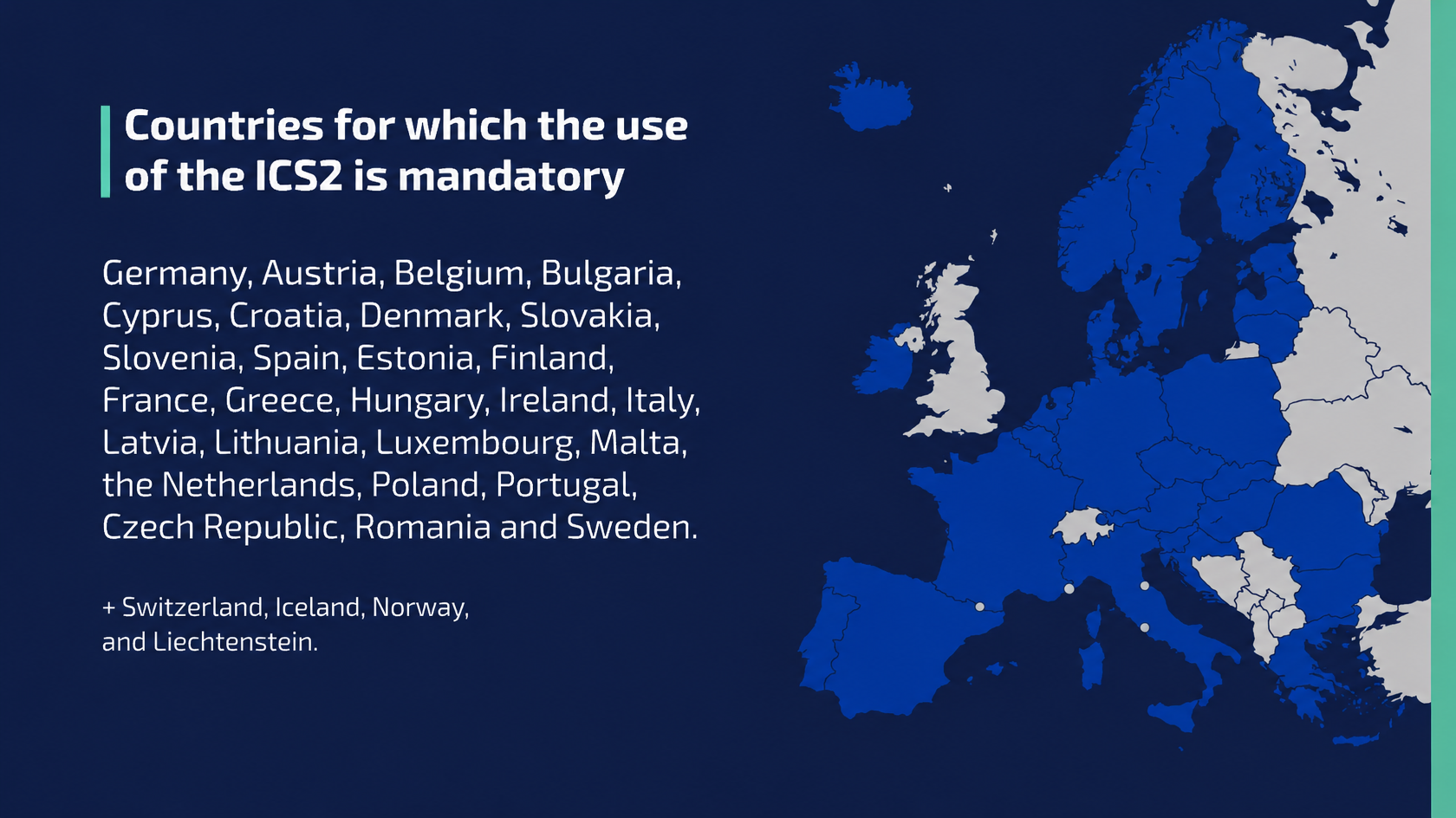
The submission of information through ICS2 is mandatory primarily for countries within the European Union, including all 27 member states. 


In addition, countries that are part of the European Economic Area (EEA), such as Iceland, Norway, and Liechtenstein, are also subject to this regulation, as they follow EU rules and regulations concerning trade and border security. 

Countries where ICS2 is mandatory The EU countries are: Germany, Austria, Belgium, Bulgaria, Cyprus, Croatia, Denmark, Slovakia, Slovenia, Spain, Estonia, Finland, France, Greece, Hungary, Ireland, Italy, Latvia, Lithuania, Luxembourg, Malta, the Netherlands, Poland, Portugal, Czech Republic, Romania, and Sweden + Switzerland, Iceland, Norway, Northern Ireland, and Liechtenstein. 

Main objectives of ICS2 implementation 

The main purpose of transmitting information through ICS2 is to ensure that European Union customs authorities can conduct a security risk analysis before goods arrive in European territory. 


In other words, it is a preventive control measure designed to protect EU borders against threats such as terrorism, smuggling, drug trafficking, weapons, and counterfeit goods. 


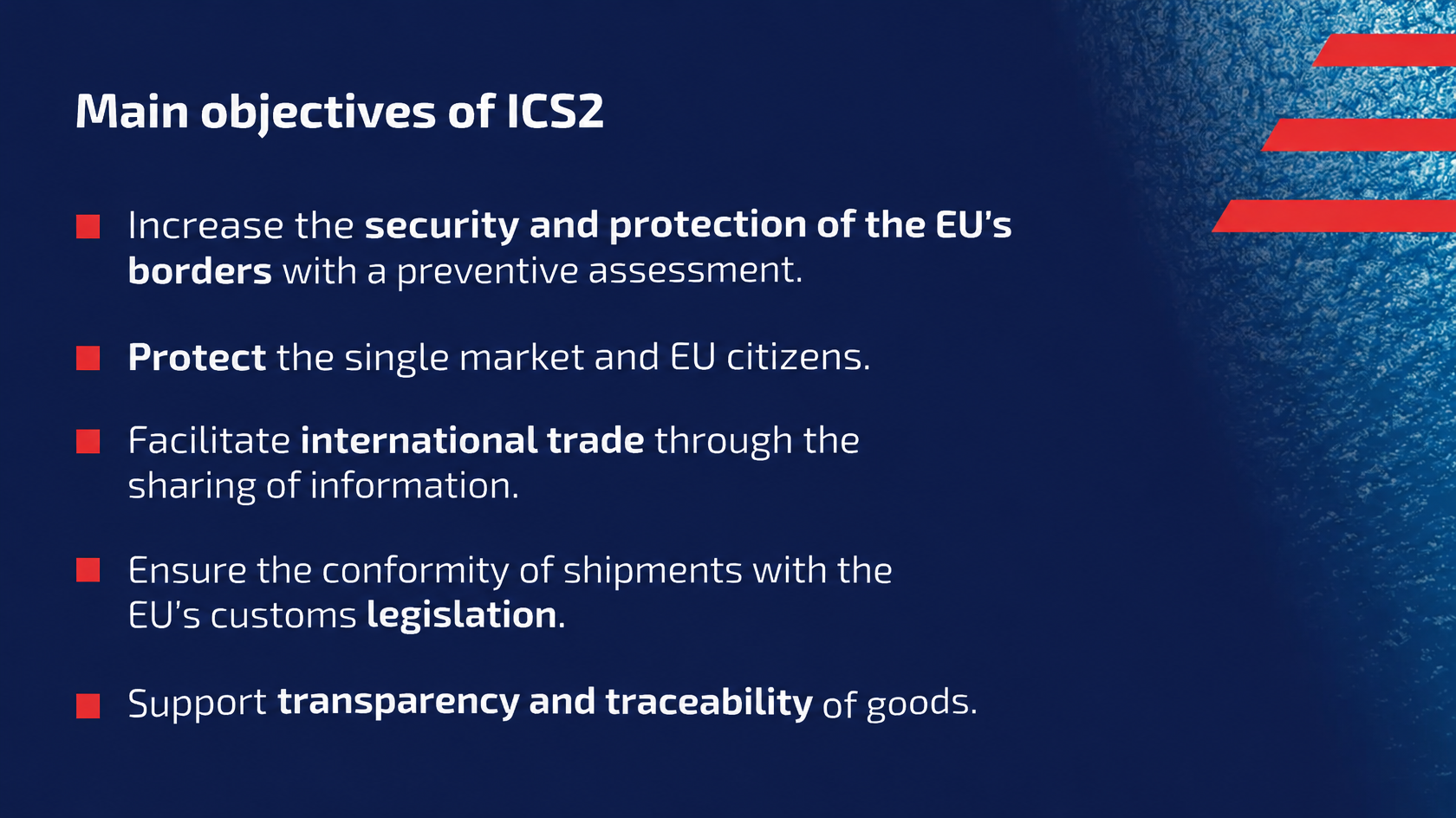
Main objectives of ICS2 Increase the security and protection of EU borders through preventive assessment. Better protect the single market and EU citizens. Facilitate international trade through information sharing. Ensure cargo compliance with EU customs legislation. Support transparency and traceability of goods. 

Impacts of ICS2 implementation 

The main change is the requirement to submit complete shipment data at the HBL (House Bill of Lading) level, including the actual details of the exporters and importers involved in the transaction. 


As a result, freight forwarders will need to adapt to an increased administrative workload, involving the collection and submission of detailed information to customs authorities, technological adjustments, and greater responsibility for the accuracy of the data provided. 


Who is responsible for the declaration? 

ICS2 requires the ENS (Entry Summary Declaration) to be submitted by the person or entity responsible for the transportation and customs clearance upon entry into the EU. 


➡️ Everything You Need to Know About the Stages of Import Customs Clearance 


Even when the freight forwarder is not responsible for customs clearance, it must ensure that all shipment-related information is correctly declared to the customs authorities, in accordance with ICS2 requirements.


Information That Must Be Provided 

Economic Operators (EOs) must submit safety and security data to ICS2 through the Entry Summary Declaration (ENS). The following information must be included: 


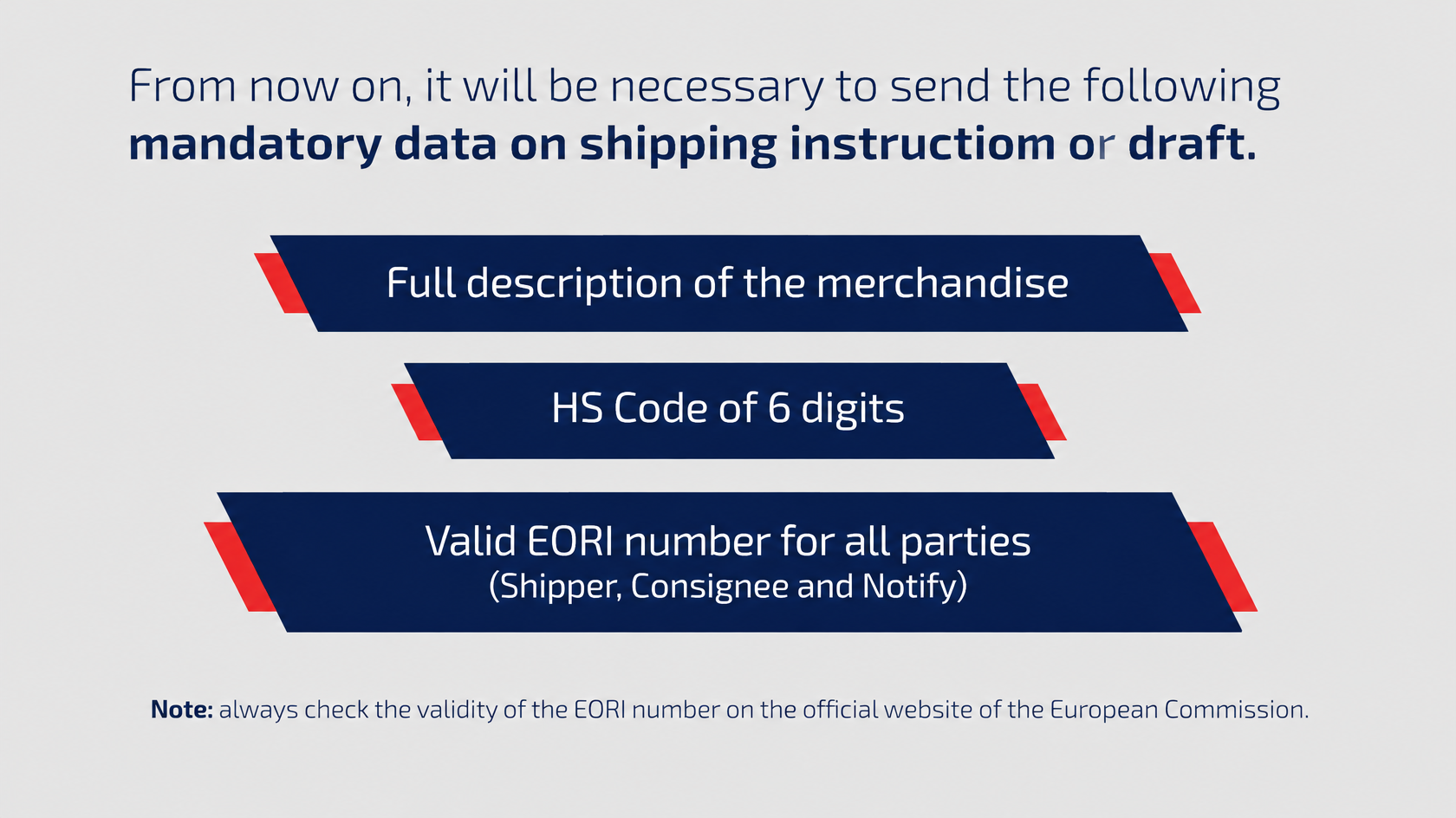
  1. Shipper's and Consignee's name and address 
  2. Cargo description (detailed and without generic terms) 
  3. HS Code (minimum of 6 digits) 
  4. Type, number of packages, and gross weight 
  5. Ports of loading and destination 
  6. Safety and security information (e.g., dangerous goods) 

➡️ Learn Everything About the Bill of Lading (BL) in International Trade 


This information is essential to ensure that cargo is properly assessed by EU customs authorities in advance, allowing for smooth cargo clearance, preventing delays, and ensuring compliance with security regulations. 


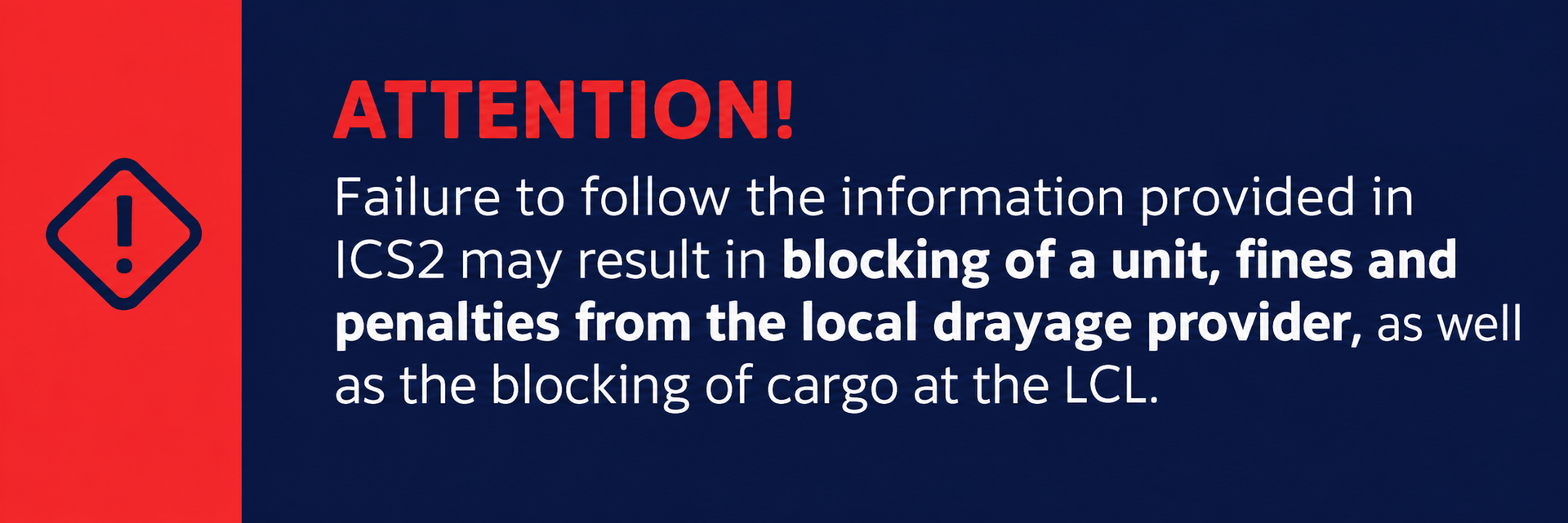
ATTENTION! Failure to comply with ICS2 data requirements may result in cargo holds, fines, and other penalties imposed by local customs authorities, as well as delays and restrictions on LCL cargo shipments. 

What Is an EORI Number? 

EORI (Economic Operators Registration and Identification) is a unique identification number assigned to companies involved in international trade operations within the European Union. 


It is directly linked to ICS2, as it is one of the mandatory data elements required in customs declarations, such as the ENS. 


Penalties for Non-Compliance 


Failure to meet these requirements may result in several consequences, including: 


  1. Cargo holds at EU borders: Shipments may be prevented from entering the EU until the correct information is provided. 
  2. ENS (Entry Summary Declaration) rejection: The system may reject the entry summary declaration if the information submitted is incorrect or incomplete. 
  3. Customs clearance delays: Goods may be held for inspection or until the necessary data corrections are made. 
  4. Fines and penalties: In some cases, those responsible for the shipment may face financial penalties. 
  5. Supply chain disruptions: Companies operating under strict deadlines may experience operational and financial impacts. 


European Union's ICS2 vs. U.S. AMS and ISF 

The European Union's ICS2 (Import Control System 2), along with the United States' AMS (Automated Manifest System) and ISF (Importer Security Filing), are regulatory and security systems designed to strengthen the control of goods entering their respective markets, primarily focusing on security and counterterrorism measures. 


Each system has its own specific requirements and objectives. However, they all aim to increase visibility and improve the monitoring of international shipments. 

How Does ICS2 Apply in Practice to Allink Customers? 

At Allink, we work with two different scenarios, depending on our customers' profiles: 


  • Self-filers: Must provide Allink with the required information in advance. 
  • Allink as the party responsible for submission: Customers must provide all the required information in full when submitting the Shipping Instructions (SI), including the actual Exporter and Consignee details. 

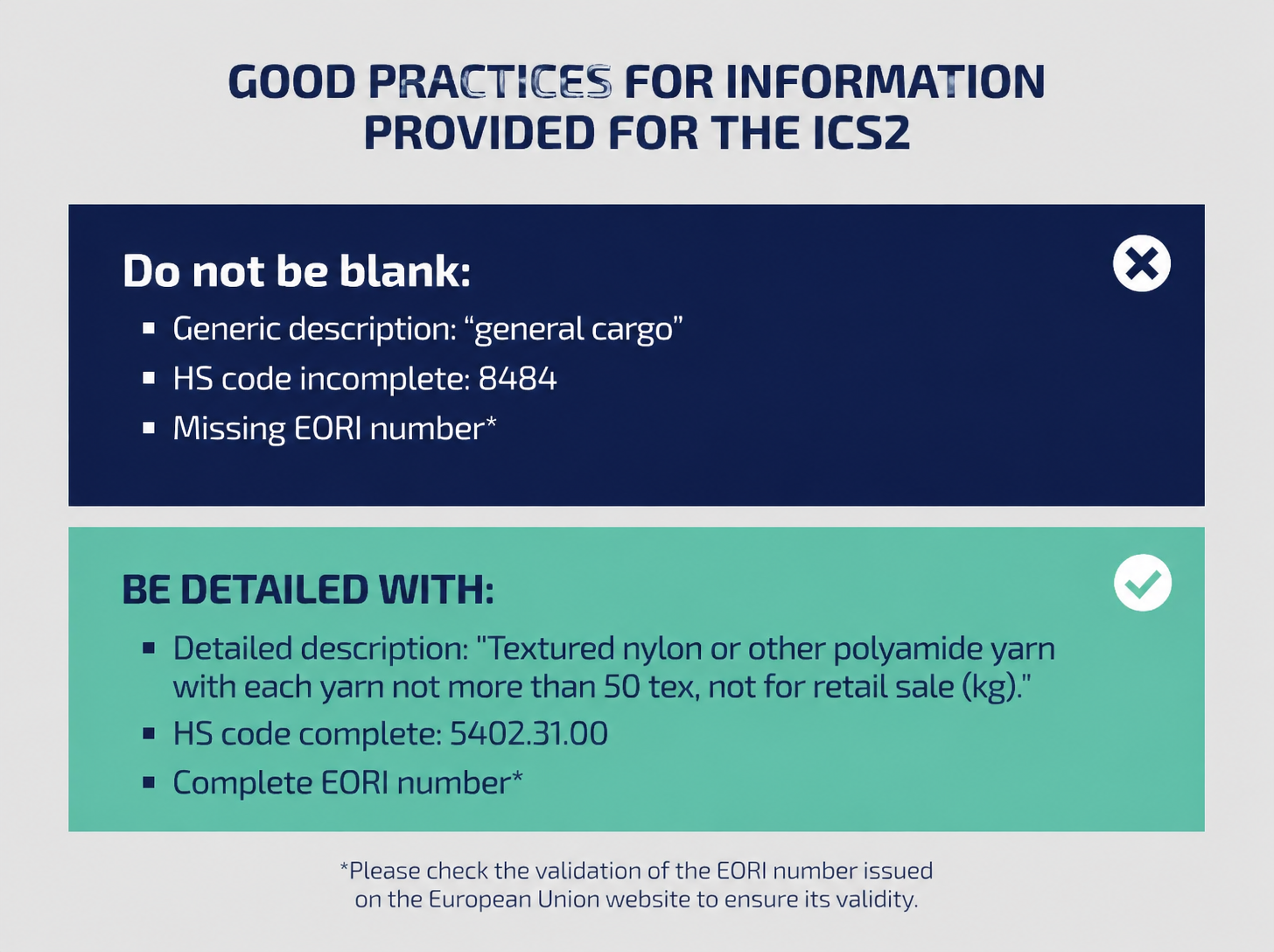
         [Best Practices for ICS2 Information Submission 

To check and validate an EORI number, visit the European Union's official website. 


Stay Up to Date with More Insights into the Maritime Shipping Industry 


If you enjoyed this article and want to keep up with other important topics in international trade, particularly maritime shipping, explore more content on our blog. 


We cover maritime shipping market trends, key industry developments, and relevant information to help you stay informed. And best of all, it's completely free! 


Conheça mais

Continue a navegar no blog da Allink

23 de setembro de 2026
Conheça os principais portos em Santa Catarina, suas características, operações e importância para a logística marítima brasileira.
23 de setembro de 2026
The ports of Santa Catarina are a reference for Brazil. This means that there is a direct impact from these ports on logistics and the Brazilian economy, as 70% of products enter and leave Brazil via maritime routes. Along a 531 km coastline, the state of Santa Catarina boasts one of the best port infrastructures in the country, with five ports of significant local and national relevance. Many companies choose the ports of Santa Catarina for their strategic positioning between the south and southeast, as well as due to the fiscal incentives offered. One such benefit is TTD 409, which provides advantages like deferred ICMS, partial deferral in the subsequent internal operation following importation, and, finally, presumed credit. However, common doubts arise about the infrastructure of these ports, especially for those unfamiliar with the reality of Santa Catarina. In this article, we will show in detail some of the main characteristics of the ports of Santa Catarina.
Por Samantha Souza • 17 de setembro de 2026
China’s calendar includes Golden Week as one of its most significant holiday periods , as this week-long break has a considerable influence on international trade. However, the importance of Golden Week goes far beyond the holiday itself: its effects extend throughout the entire logistics chain. Therefore, for companies that rely on operations with China, understanding this period is essential to anticipate decisions, organize shipments, and minimize operational impacts . In this article, you will find: What is Golden Week and how does it impact foreign trade? How does Golden Week affect international ocean freight logistics? The pause is part of the process: how can companies prepare? Quality information for efficient ocean freight logistics Frequently Asked Questions What is Golden Week and how does it impact foreign trade? Golden Week is a holiday period in China associated with the country's National Day. In 2026, it will take place from October 1 to 7, according to the official calendar released by the Chinese government . In other words, various production and operational activities significantly slow down throughout these days. Naturally, this affects manufacturers, suppliers, carriers, and other members of the logistics chain. However, it is important to highlight that, when it comes to foreign trade, the impact does not begin only on the first day of the holiday in China. Companies need to plan their processes in advance to avoid delays before the break. Once the holiday ends, they must also deal with the gradual resumption of operations. How does Golden Week affect international ocean freight logistics? Golden Week should not be viewed simply as an interruption, but rather as a situation capable of changing operational flows and planning in ocean freight logistics . Early shipment planning and capacity pressure One of the main effects of Golden Week is the need to bring shipments forward. In other words, importers and exporters must review their schedules to ensure that cargo is shipped before operational activities slow down. In practice, this need can create greater pressure on available space, deadlines, and ocean freight transportation planning. That is why importers, exporters, shippers, freight forwarders, and logistics operators need to make decisions in advance to minimize unexpected situations and manage their supply chains more efficiently. Changes in the logistics chain's pace Golden Week demonstrates how international logistics operates as a highly interconnected system . In other words, a change at one stage can end up influencing the subsequent phases of a company's operation. As activities in China slow down, there may be a greater concentration of shipments before the holiday. After Golden Week, the resumption of production and capacity adjustments made by ocean carriers may once again change space availability and service schedules. Capacity adjustments and blank sailings Another point that requires attention around Golden Week is the potential capacity adjustments made by ocean carriers. Depending on demand and service schedules, blank sailings may occur, meaning that a previously scheduled voyage is canceled. These adjustments can affect space availability and shipping schedules, especially during the periods leading up to and following the holiday. ➡️ Read also | Follow-up in international transportation: what it is and its impacts The pause is part of the process: how can companies prepare? To navigate Golden Week with greater predictability and confidence, adopting some important practices is recommended. Here are a few of them. Plan shipments in advance Reviewing orders, volumes, and deadlines before Golden Week makes it possible to identify which shipments need to be prioritized, as well as which operational stages depend on Chinese suppliers. Organize documents and operational information Proper documentation is one of the key factors in preventing delays during this period. Reviewing processes in advance helps ensure smoother operations throughout this week in China, when the pace of international logistics changes. Monitor the situation before, during, and after Golden Week The slowdown in China requires companies to focus on three different stages: preparing for the holiday, monitoring developments during the break, and managing the resumption of operations. In other words, this process requires continuous communication between internal teams and ongoing analysis of the situation, helping facilitate decision-making throughout this period. Quality information for efficient ocean freight logistics Due to the Chinese holiday, foreign trade companies need to consider how this period will influence each of their operations. Therefore, it is important to closely monitor those who turn the ocean freight logistics landscape into greater predictability and efficiency . With proper preparation, an understanding of the current situation, and decisions made in advance, companies can navigate this period with greater confidence, keeping their operations aligned with the best practices in international ocean freight logistics. Frequently Asked Questions about Golden Week Check out the answers to the most common questions about this topic below: 1. What is Golden Week in China? Golden Week is a national holiday period in China associated with the country's National Day. During this week, various production and operational activities slow down, which can affect suppliers, manufacturers, carriers, and other participants in the international logistics chain. 2. How does Golden Week impact international ocean freight logistics? Golden Week can affect international ocean freight logistics due to the temporary slowdown of activities in China. This situation may create the need to bring shipments forward, lead to changes in operational planning, concentrate cargo volumes before the holiday, and require adjustments after operations resume. 3. Can Golden Week affect shipping schedules? Yes. Since this period can change production flows, cargo release processes, and ocean carrier service schedules, shipping deadlines may be affected. For this reason, companies with operations involving China should monitor their schedules and coordinate each stage of the shipment in advance. 4. What are blank sailings and how are they related to Golden Week? A blank sailing is the cancellation of a previously scheduled ocean voyage by a carrier. During periods such as Golden Week, capacity and service schedule adjustments may occur, potentially affecting space availability and shipping schedules. 5. How can companies prepare for Golden Week? To prepare for Golden Week, companies should review their shipment schedules, align information with suppliers, organize the necessary documentation, and monitor potential changes to logistics schedules before, during, and after the holiday.

Mantenha-se informado(a) sobre o transporte marítimo internacional

Assine nossa newsletter e receba atualizações frequentes e de forma gratuita sobre o mundo da logística.